
Comité
Veilige
Opvang
Amsterdam
The solution
For a structural solution to a structural problem, the Committee for Safe Shelter Amsterdam draws hope and inspiration from Omari’s story.
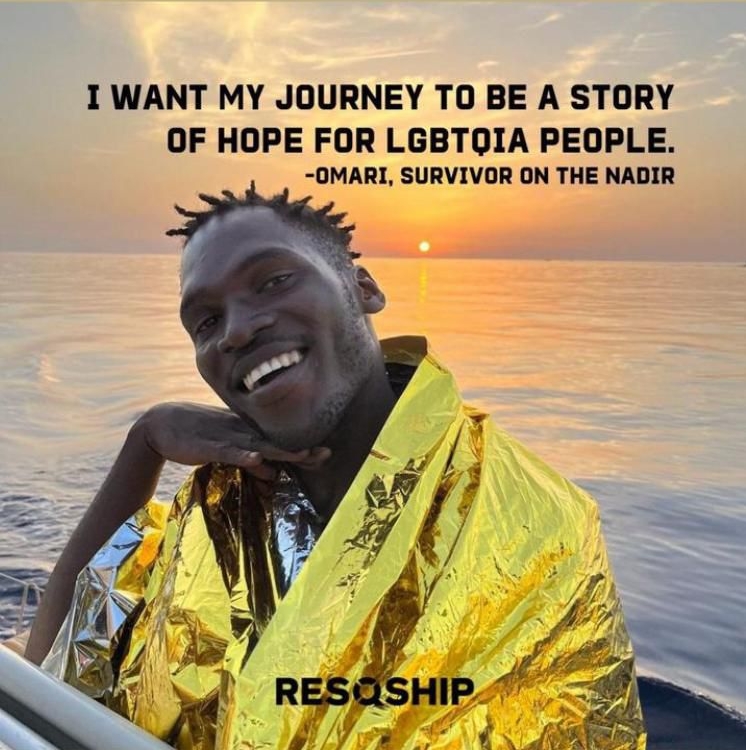
© ResQship/OmariHaving fled severe anti‑gay violence in his home country, Omari initially sought protection (asylum) in the Netherlands. To his shock, he encountered serious discrimination, exclusion, threats, and even violence in Dutch asylum centres as well. When after six months EU rules required him to reapply for asylum in Germany, he there discovered that things could be done differently.
During registration in Germany he was asked whether he belonged to a vulnerable refugee category and therefore had special reception needs. When he said yes, he was placed in one of the dozens of German reception centres reserved for this purpose. There, after years of searching, he finally found a place where he could live in safety.
Omari’s story is remarkable not only because of his incredible refugee journey but also because he personally experienced both the problem of and the solution to (un)safe asylum reception and housing centres. From Germany, which has since granted him asylum, he works with CVOA to advocate for safer reception in the Netherlands.
European examples
© CVOA
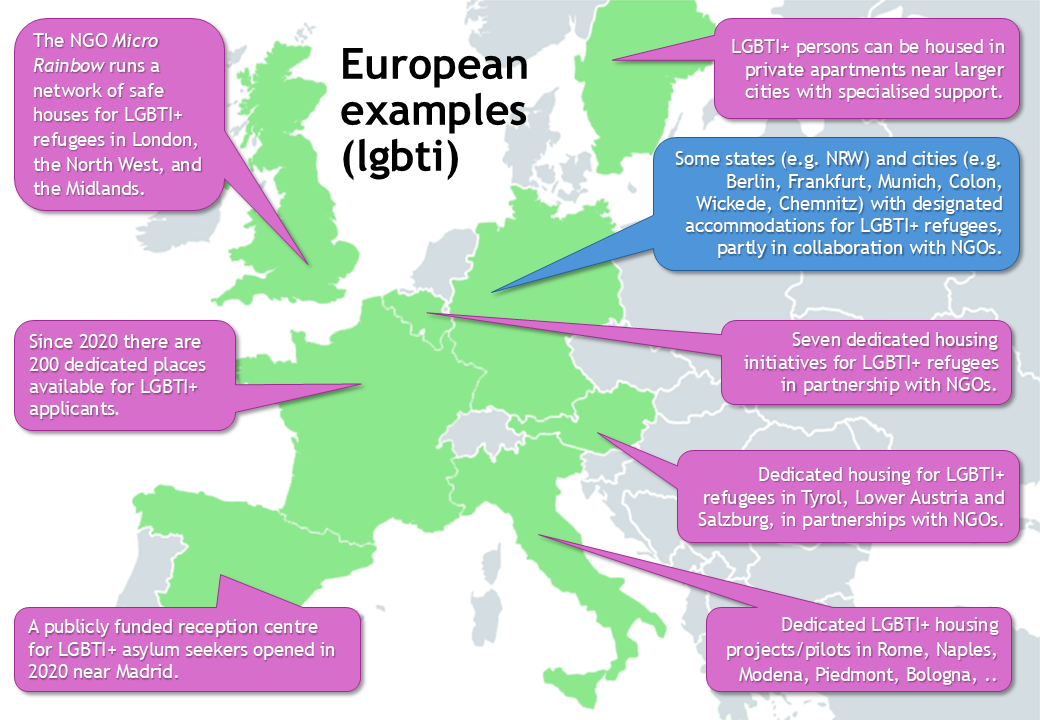
Many countries and cities in Europe have been working for years to provide safer reception to vulnerable groups such as women, children, and queer people. In Germany, asylum seekers are asked at registration whether they belong to a vulnerable category and, if so, whether that brings specific reception and housing needs. Across the country, dozens of centres provide enhanced safety for vulnerable refugee categories in this way.
Elsewhere in the EU, various smaller‑scale initiatives exist or are being developed — often though collaborations between governments and civil‑society organisations — to create separately located reception and housing facilities.
EU law and Dutch policy
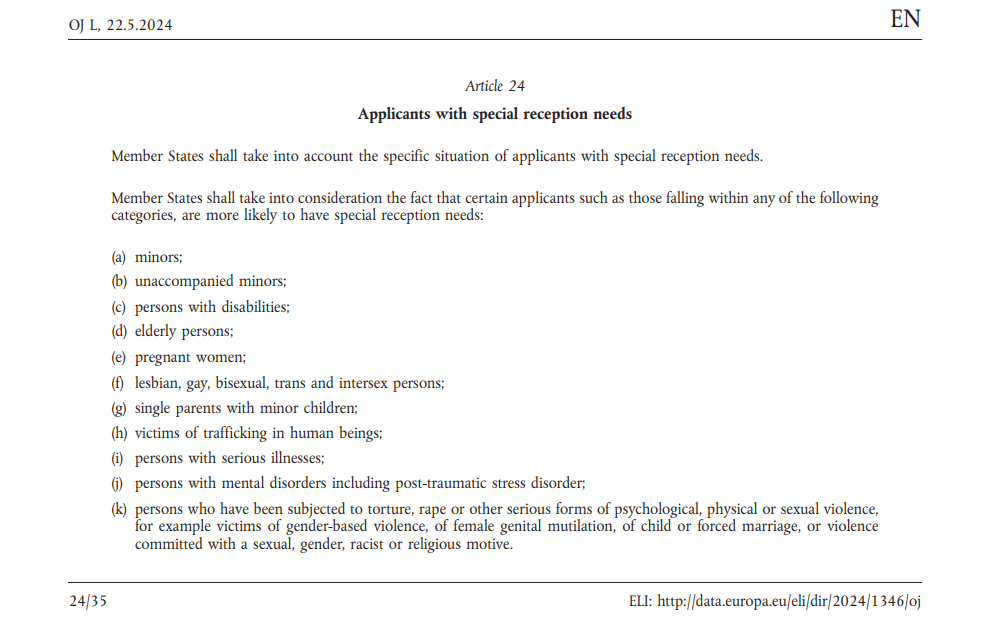
The modified EU Reception Condition Directive specifies categories of refugees who are inherently more vulnerable in reception centres and therefore may have particular reception and housing needs. Since June 2026 the directive requires member states, including the Netherlands, to assess within 7 days whether asylum seekers belong to a vulnerable category and, where possible, then to meet their specific reception needs. In the Netherlands, the Immigratie en Naturalisatiedienst (IND) is responsible for this screening.
Also in the Netherlands, the governing coalition of D66, VVD, and CDA wrote in their coalition agreement: “We will provide greater protection for vulnerable groups in reception — such as LGBTI+ people, children, and converts.” What form this added protection will take has not yet been established. A centre in Amsterdam would fit in perfectly with this policy goal.
Amsterdam: proposal from the City Council
© CVOA
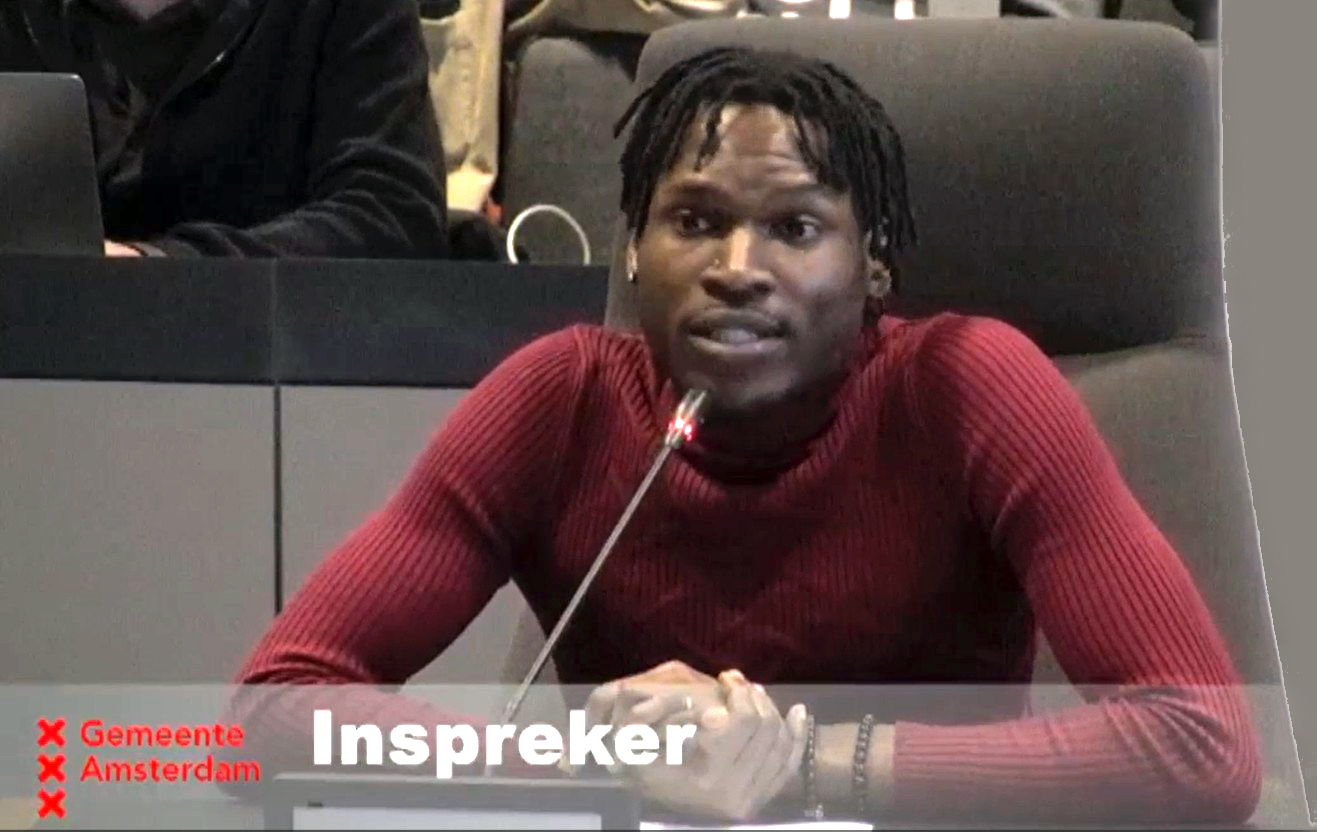
In February 2025, CVOA addressed a meeting of the Amsterdam City Council to draw attention to the unsafe housing conditions of vulnerable refugees. In consultation with authorities and reception managers in Germany, the Committee invited the Amsterdam City Council to visit a reception centre near Dortmund that is reserved for vulnerable refugee categories. That work visit took place in June 2025.
In December 2025, four council groups (D66, GroenLinks [now PRO], Volt, and the Party for the Animals) submitted a joint proposal, inspired by the work visit and the work of the committee, to the City Government. The proposal calls for Amsterdam, in cooperation with the Central Agency for the Reception of Asylum Seekers (COA) and civil‑society partners, to establish safe, separately located reception capacity for vulnerable refugee categories at one or more locations in Amsterdam.
© PRO/D66
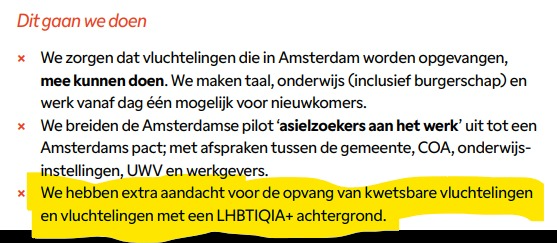
In June 2026, the newly elected PRO and D66 council groups presented a coalition agreement for 2026 until 2030. It states that the City of Amsterdam “will give extra attention to the reception of vulnerable refugees and refugees with an LGBTIQ+ background”.
While the Amsterdam City Council and City Government, COA and other partners explore and develop options for safe reception capacity, the Committee continues to work to accelerate the process and to ensure that safe reception capacity for vulnerable refugees will be opened in Amsterdam as soon as possible.